 Pin
Pin There's something about October that makes me crave butternut squash soup, but this particular recipe came to life on a Tuesday afternoon when my neighbor dropped off three enormous squashes from her garden. I stood in my kitchen looking at these beautiful orange gourds, thinking I had to do them justice. That's when I remembered my grandmother's approach to soup—roast everything first to coax out the natural sweetness, then let the spices whisper rather than shout. The result was so good that I've made it countless times since, each batch reminding me why this simple soup became a kitchen staple.
I'll never forget the first time I served this to my skeptical brother-in-law, who claimed he didn't like squash soup because it was always too sweet. He took one spoonful, paused, and asked if I'd added something secret to it. The honesty in his reaction taught me that good food doesn't need tricks—just a little patience and respect for what you're cooking with.
Ingredients
- 1 large butternut squash (about 2.5 lbs), peeled, seeded, and cubed: The star of the show—its natural sweetness becomes almost caramel-like when roasted, which is why buying one large squash gives better flavor than several small ones.
- 1 medium yellow onion, chopped: This builds the savory foundation and keeps the soup from tasting one-dimensional.
- 2 cloves garlic, minced: Don't skip this even though the amount seems small; it adds a subtle earthiness that makes people ask what the mystery ingredient is.
- 4 cups vegetable broth: Use good quality broth—it makes a real difference in the final taste since there aren't many other flavors competing for attention.
- 2 tbsp olive oil: One tablespoon for roasting the squash and one for sautéing the aromatics; splitting it ensures both get proper attention.
- 1 tsp sea salt: Taste as you go because roasted ingredients concentrate differently than raw ones.
- 1/4 tsp ground black pepper: Fresh-cracked is worth the extra step here.
- 1/2 tsp ground nutmeg: This is the secret that makes people stop mid-spoonful and wonder what they're tasting.
- 1 tsp dried sage (or 1 tbsp fresh sage, chopped): Sage and butternut squash are old friends; it's an automatic pairing for a reason.
- 1/4 cup heavy cream or coconut milk for swirling: A drizzle at the end transforms the soup from good to unforgettable, creating beautiful ribbons as you stir.
- Roasted pumpkin seeds: The textural contrast keeps things interesting and adds a nutty flavor that echoes the spices.
- Fresh sage leaves: A small garnish that reminds your eyes and nose what you're about to taste.
Tired of Takeout? 🥡
Get 10 meals you can make faster than delivery arrives. Seriously.
One email. No spam. Unsubscribe anytime.
Instructions
- Prep and roast the squash:
- Set your oven to 400°F and get a baking sheet ready with parchment paper. Toss those butternut squash cubes with one tablespoon of olive oil, a pinch of salt, and pepper, then spread them out in a single layer so they can actually touch the heat and caramelize rather than steam.
- Let the oven work its magic:
- Roast for 30 to 35 minutes, stirring halfway through so every piece gets that deep golden color. You'll know it's done when the edges are almost charred and the insides are completely tender—this is where the flavor happens.
- Build the flavor base:
- In a large pot, warm the remaining tablespoon of olive oil over medium heat and add your chopped onion. Cook it slowly until it turns translucent and starts to soften, about 4 to 5 minutes, then add the minced garlic for just one more minute.
- Bring it together:
- Add your roasted squash to the pot along with the sage and nutmeg, then pour in the vegetable broth. Bring everything to a boil, then immediately turn the heat down and let it simmer gently for 10 minutes so the flavors can get acquainted.
- Blend until silky:
- Remove the pot from heat and use an immersion blender to puree the soup right in the pot, working in circular motions until there are no lumps and the texture is completely velvety. If you don't have an immersion blender, carefully transfer the soup in batches to a countertop blender and blend until smooth, then pour it back into the pot.
- Taste and adjust:
- This is crucial—taste your soup now and decide if it needs more salt or pepper. Sometimes the roasted squash surprises you with its sweetness, and that changes what the seasoning should be.
- Serve with intention:
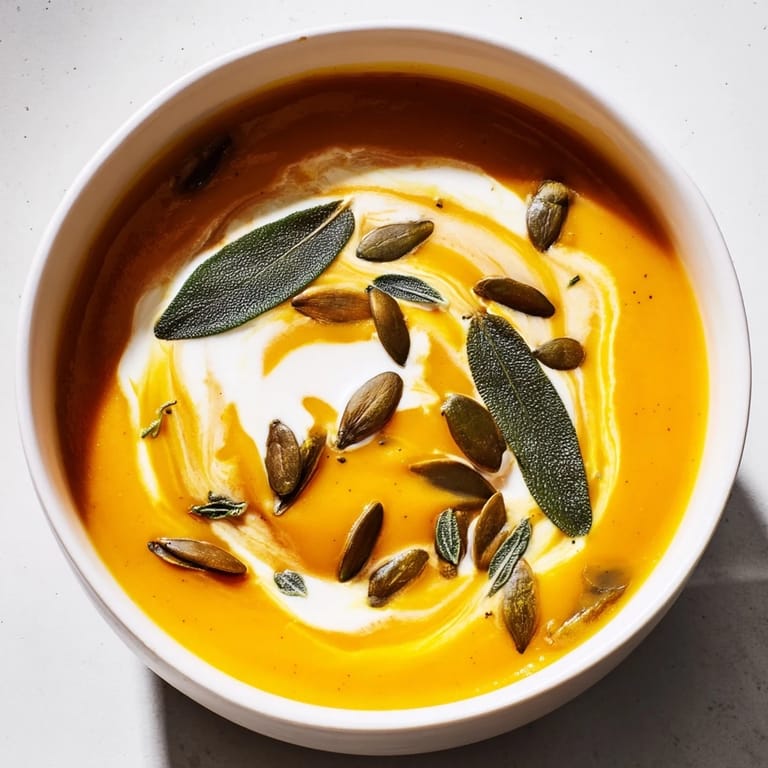
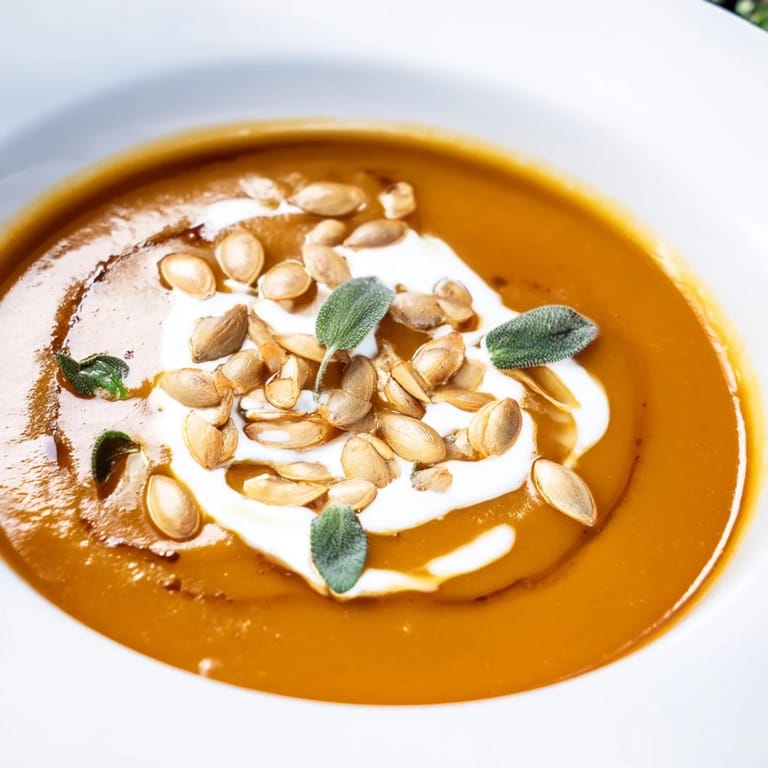
- Ladle the soup into bowls and top each one with a swirl of cream or coconut milk, a small handful of roasted pumpkin seeds, and maybe a few fresh sage leaves if you have them on hand.
 Pin
Pin What struck me most was watching my daughter, who normally picks around soup like it's homework, ask for a second bowl and then wonder if we could make it again the next day. That's when I realized this recipe wasn't just delicious—it was the kind of food that brings people back to the table.
Why Roasting Changes Everything
The first time I made this soup without roasting the squash, just simmering it straight in the broth, I created something that tasted fine but forgettable. Roasting caramelizes the natural sugars and creates depth that simmering alone can't achieve. It's one of those cooking lessons that sticks with you—sometimes the extra step isn't extra at all, it's essential.
Making It Your Own
This recipe is forgiving in ways that make it perfect for experimenting. I've added a pinch of cayenne pepper when I wanted warmth, swapped the sage for thyme when that's what I had on hand, and even stirred in a small splash of maple syrup when the squash wasn't as sweet as I'd hoped. The base is strong enough to handle your creative mood without falling apart.
Serving Suggestions and Storage
This soup tastes even better the next day after the flavors have settled, which makes it perfect for batch cooking on a weekend and having lunch sorted all week. It keeps beautifully in the refrigerator for up to four days and freezes well for up to three months—just remember to leave a little headspace in your containers because soup expands when it freezes.
- Serve alongside crusty bread for dipping, or pair with a salad if you want something lighter alongside it.
- A splash of good white wine like Sauvignon Blanc complements the earthiness of the sage and the sweetness of the squash.
- For a complete meal, add roasted chickpeas on top to make it heartier without losing the soup's essential character.
 Pin
Pin There's comfort in simplicity, and this soup embodies that perfectly. It asks for your time but not your stress, and it rewards you with something warm and nourishing that tastes like care.
Recipe Q&A
- → What is the best way to roast butternut squash?
Peel and cube the squash, then toss with olive oil, salt, and pepper. Roast at 400°F for 30–35 minutes until tender and caramelized.
- → Can I make this soup vegan?
Yes, substitute heavy cream with coconut milk to keep it creamy and dairy-free.
- → How do sage and nutmeg affect the flavor?
Sage adds earthy, herbaceous notes while nutmeg brings warmth and a subtle spice to enhance sweetness.
- → Is it necessary to blend the soup until smooth?
Blending creates a creamy, velvety texture that balances the roasted squash’s natural sweetness and softens the spices.
- → What garnishes complement this dish?
Try a swirl of cream or coconut milk and roasted pumpkin seeds for added richness and crunch.
- → Can this dish be made spicy?
Adding a pinch of cayenne pepper during cooking will lend a gentle heat without overpowering the flavors.