 Pin
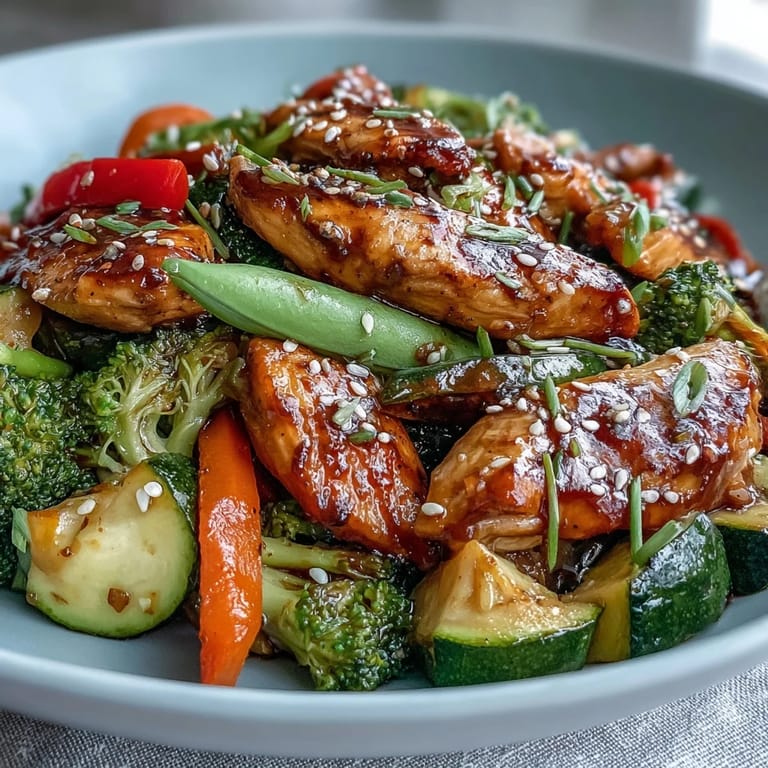
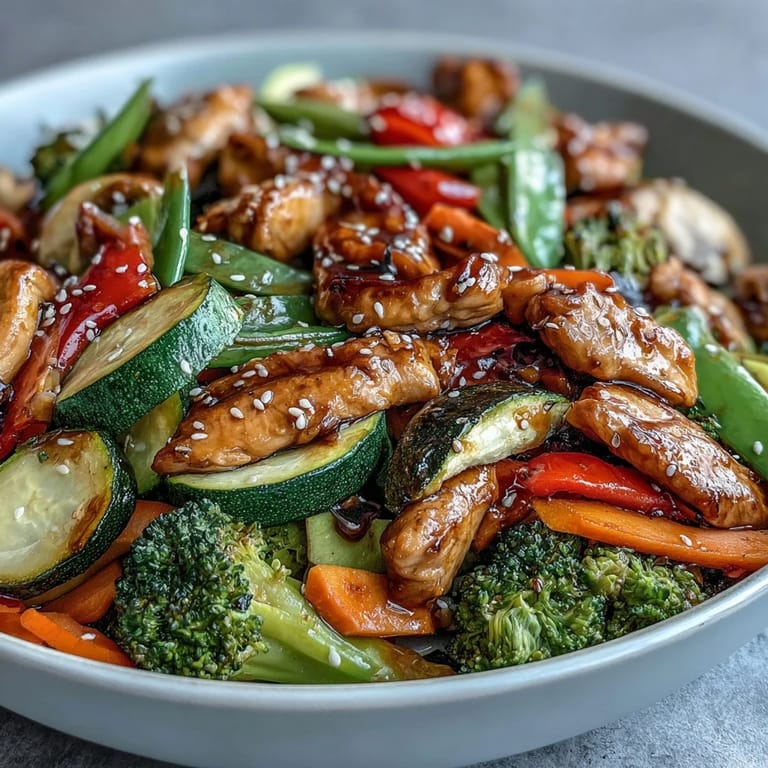
Pin I was standing in my kitchen on a Tuesday evening, staring at a chicken breast and wondering how to make something that didn't taste like pure obligation, when I decided to throw together whatever colorful vegetables I had on hand. That first stir-fry taught me that speed and simplicity could actually taste exciting, especially when you let each ingredient keep its snap and character. Now I make this constantly, and it's become the kind of meal where people stop mid-conversation to ask what smells so good.
My roommate came home one night just as I was finishing this, and she literally dropped her bag and asked if she could have some before asking how my day was. That's the moment I realized this wasn't just a healthy meal I was making for myself, it was something genuinely delicious enough to make someone forget their manners.
Ingredients
- Chicken breast: Slice it thin so it cooks through in minutes without drying out; I learned this the hard way after years of sad, rubbery chicken.
- Red and yellow bell peppers: The colors matter because they don't all cook at the same speed, so you get layers of flavor and texture.
- Zucchini: Cut it into half-moons and don't overcrowd the pan or it'll steam instead of sear.
- Snap peas: These stay crisp and sweet if you add them early; they're my favorite texture in this whole dish.
- Carrot: Julienne it thin so it actually gets tender instead of staying crunchy like a raw stick.
- Broccoli florets: Keep them small so they cook through without turning brown, and they add a little earthiness that balances the sweetness.
- Spring onions: Save these for garnish at the very end so they stay fresh and bright tasting.
- Soy sauce or tamari: Low-sodium is key because you're reducing the sauce and salt concentrates, plus tamari is your gluten-free option.
- Oyster sauce: This optional ingredient adds a mysterious depth that makes people ask what your secret ingredient is.
- Rice vinegar: A little tang cuts through the richness and makes everything taste cleaner.
- Sesame oil: Use real sesame oil, not the light stuff; a little goes a long way and it smells like toasted happiness.
- Ginger and garlic: Fresh is non-negotiable here because they're basically the soul of this dish.
- Chili flakes: Optional but I use them because life is short and bland food is boring.
- Cornstarch slurry: This thickens the sauce so it coats everything instead of just pooling at the bottom.
- Vegetable oil: Use something with a high smoke point like avocado oil if you want to feel fancy.
Tired of Takeout? 🥡
Get 10 meals you can make faster than delivery arrives. Seriously.
One email. No spam. Unsubscribe anytime.
Instructions
- Make your sauce first:
- Whisk together soy sauce, oyster sauce if using, rice vinegar, sesame oil, ginger, garlic, chili flakes, and your cornstarch slurry in a small bowl. This step takes two minutes and changes everything because you're never scrambling mid-cook.
- Get your pan screaming hot:
- Heat one teaspoon of vegetable oil in a large non-stick skillet or wok over medium-high heat until you see wisps of smoke. The heat is what gives you that restaurant-quality sear.
- Cook the chicken until golden:
- Add your chicken slices in a single layer and don't touch them for a minute, then stir-fry until lightly golden and cooked through, about 4 to 5 minutes total. You'll know it's done when there's no pink inside and the edges are slightly caramelized.
- Build your vegetable base:
- Add the remaining oil and the harder vegetables (broccoli, carrot, snap peas) first, stir-frying for about 2 minutes. These need the head start because they take longer to soften than the bell peppers.
- Add the quick-cooking vegetables:
- Toss in the bell peppers and zucchini, stirring everything constantly for 2 to 3 more minutes until the vegetables are crisp-tender and the kitchen smells absolutely incredible. You want them still snappy, not mushy.
- Bring it all together:
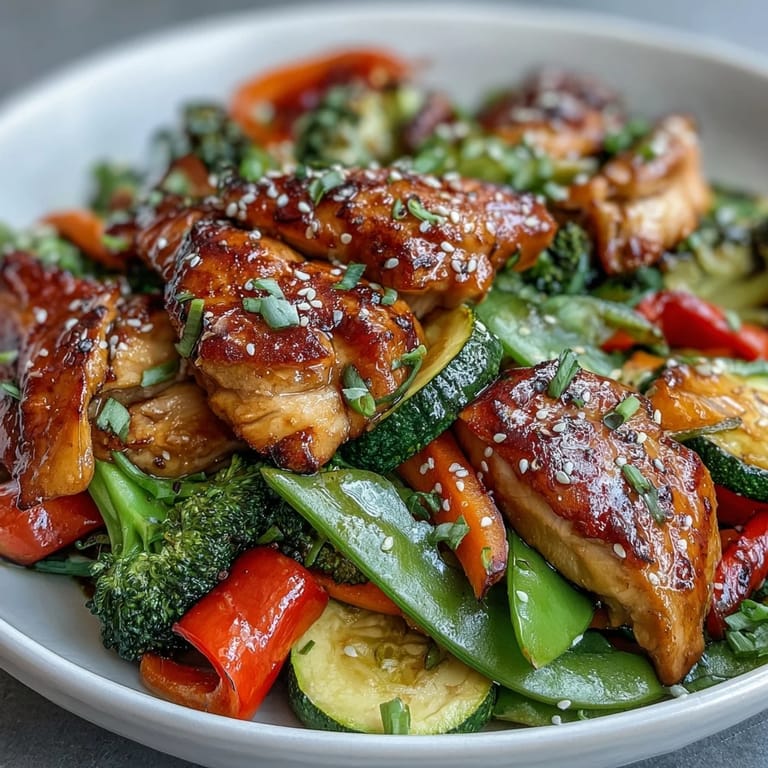
- Return the chicken to the pan, pour in that sauce you made earlier, and toss everything together for 2 to 3 minutes until the sauce thickens and coats every piece. Watch it come together and taste a vegetable to make sure it's got that perfect firmness.
- Finish with fresh spring onions:
- Scatter the sliced spring onions on top and serve immediately while everything is still hot and vibrant.
 Pin
Pin I made this for my friend who was training for a marathon and she started meal-prepping it in bulk because it tasted good enough to eat five days in a row without getting bored. That's when I knew this recipe had transcended being just efficient and actually become something people genuinely wanted to eat.
The Secret to Crispy Vegetables
The magic isn't in some complicated technique, it's just understanding that different vegetables need different amounts of time. Broccoli and carrots go in first because they're denser, then the faster-cooking peppers and zucchini follow after a couple minutes. I used to throw everything in at once and wondered why some vegetables were perfect while others were sad, and this was the lesson that changed my stir-fry forever.
Protein That Actually Stays Juicy
The key here is slicing the chicken thin and not overthinking it. A lot of people try to flip it constantly or cook it at the wrong temperature, but if you give it heat and just leave it alone for a minute, you get those beautiful golden edges without a dense, dry interior. I learned this from a cooking video I watched while procrastinating on a Sunday afternoon, and it genuinely changed how I cook chicken in every single dish now.
Ways to Make It Your Own
The beauty of a stir-fry is that you can swap almost anything based on what's in your fridge or what you're craving that day. I've made it with shrimp when I'm feeling fancy, tofu when I want something lighter, and even added cashews when I had them hanging around. Here are some easy tweaks that keep things interesting without changing what makes this dish special.
- Swap the chicken for shrimp, tofu, or turkey breast depending on what sounds good.
- Use whatever vegetables are in season or on sale; frozen broccoli and snap peas work beautifully if fresh isn't available.
- Add a sprinkle of toasted sesame seeds or chopped peanuts at the end for crunch and healthy fats.
 Pin
Pin This is the kind of meal that makes you feel like you're taking care of yourself without tasting like punishment, which honestly is the whole point. Make it once, and I promise you'll find yourself making it again and again.
Recipe Q&A
- → Can I make this dish vegetarian?
Yes, simply swap the chicken for firm tofu or edamame. Adjust cooking time accordingly as tofu requires less time to cook through.
- → What vegetables work best for stir-frying?
Bell peppers, broccoli, snap peas, carrots, and zucchini are excellent choices. They maintain texture when cooked quickly over high heat and absorb flavors beautifully.
- → How do I prevent the sauce from becoming too thick?
The cornstarch slurry thickens the sauce naturally. If it becomes too thick, simply add a tablespoon of water or broth to reach your desired consistency.
- → Can I prepare the ingredients ahead of time?
Absolutely. Slice the vegetables and chicken up to 24 hours in advance and store them in airtight containers in the refrigerator. The sauce can also be mixed ahead and kept refrigerated.
- → What's the best way to slice chicken for stir-fry?
Partially freeze the chicken for 20 minutes before slicing. This makes it easier to cut thin, even strips against the grain for tender results.