 Pin
Pin There's something about assembling a Buddha bowl that feels like painting on a plate. I discovered this particular combination while standing in my kitchen on a gray Tuesday, staring at a pile of vegetables that needed using and a jar of sesame oil I'd been saving. The dressing came together almost by accident—a taste here, a squeeze there—and suddenly I had something vibrant enough to chase away the afternoon slump. Now it's become my go-to when I want nourishment that doesn't feel like a chore.
My friend Maya asked me to bring something to her place for lunch, and I assembled four of these bowls while she poured coffee. By the time I set them down, she'd already noticed the colors and said it looked too pretty to eat. We laughed about it for exactly three seconds before she dove in, and I watched her expression shift from skepticism to genuine delight. That's when I knew this recipe was worth sharing.
Ingredients
- Brown rice or quinoa: The foundation that makes this actually filling; I learned the hard way that undercooked grains make the whole bowl feel incomplete, so give it the full time.
- Cherry tomatoes: Halving them prevents that awkward moment when one rolls across the table, and they release just enough juice to flavor the grain beneath.
- Red cabbage: The shred keeps it tender but substantial, and its natural crunch survives dressing better than you'd think.
- Carrots: Shredded rather than chopped because they soften slightly under the dressing and become less of a chore to eat.
- Yellow bell pepper: The thin slices make it approachable and add brightness without overwhelming other flavors.
- Broccoli florets: Raw or lightly steamed—I prefer raw for that satisfying bite, though steam softens them if you prefer gentler textures.
- Avocado: Slice it just before assembling so it doesn't brown and turn that disappointing grey-green you're trying to avoid.
- Cooked chickpeas: Drain and rinse canned ones thoroughly; the extra step removes that tinny taste and keeps the bowl's flavors clean.
- Sesame seeds: Toast them yourself if you have time—the difference between toasted and raw is night and day in terms of flavor.
- Fresh cilantro or parsley: Cilantro brings a sharp herbal note, while parsley is milder; choose based on your mood and who's eating.
- Green onions: The bite cuts through the richness and adds a whisper of allium without being aggressive.
- Toasted sesame oil: The dark kind with real sesame flavor, not the pale stuff; it's what makes the dressing sing.
- Tamari or soy sauce: Tamari if anyone at your table avoids gluten, and it has a slightly rounder flavor than regular soy sauce anyway.
- Rice vinegar: Gentle and slightly sweet, it balances the richness without adding harsh acid like white vinegar would.
- Maple syrup or honey: A teaspoon or two of either softens the edges and makes the dressing taste intentional rather than sharp.
- Fresh ginger: Microplane it if you have one; you'll get fine, distributed heat rather than chewy pieces.
- Garlic and lime: The garlic mellow in the dressing if it sits, and the lime juice is non-negotiable for brightness.
Tired of Takeout? 🥡
Get 10 meals you can make faster than delivery arrives. Seriously.
One email. No spam. Unsubscribe anytime.
Instructions
- Get your grain going:
- Rinse the rice or quinoa under cold water to remove excess starch, then add to a pot with the measured water and bring to a boil. Once it boils, lower the heat, cover, and let it simmer for 15 to 20 minutes until the liquid absorbs and the grains turn tender; this is when you can move on to everything else without feeling rushed.
- Prep while it cooks:
- Wash and chop all your vegetables as you go—halve the tomatoes, shred the cabbage and carrots, slice the pepper into thin strips, chop the broccoli if needed, and set everything in separate bowls so you can see the rainbow building.
- Whisk the dressing:
- In a small bowl, combine the sesame oil, tamari, rice vinegar, maple syrup, ginger, garlic, and lime juice, whisking until everything emulsifies slightly and the garlic disperses. Taste it and adjust—if it's too salty, add more lime juice; if it's too sharp, a touch more maple syrup smooths it out.
- Handle the broccoli thoughtfully:
- If you want it softer, steam the florets for 3 to 4 minutes until they're bright green and just tender; if you like crunch, leave them raw and let the dressing soften them gradually.
- Arrange with intention:
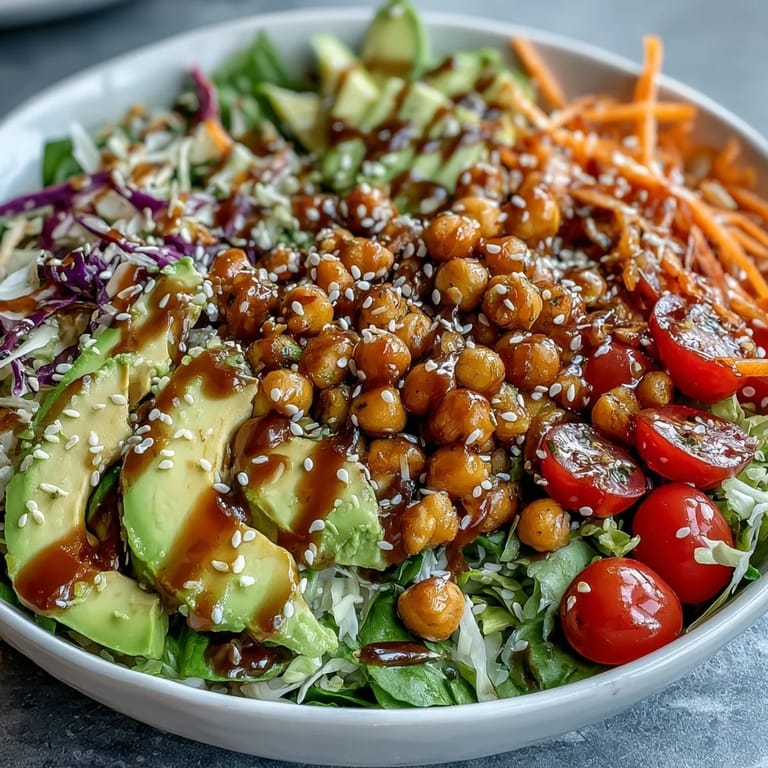
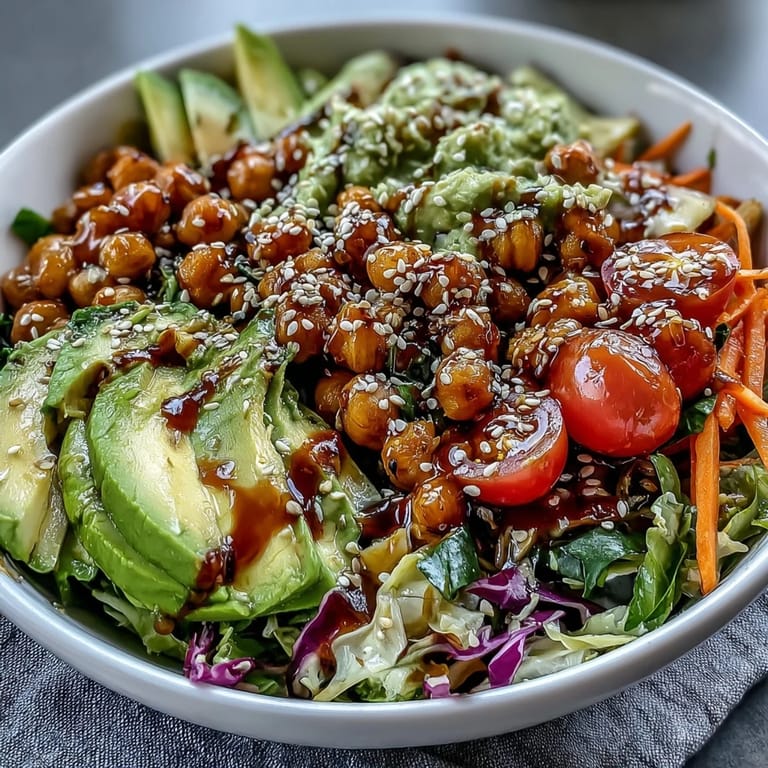
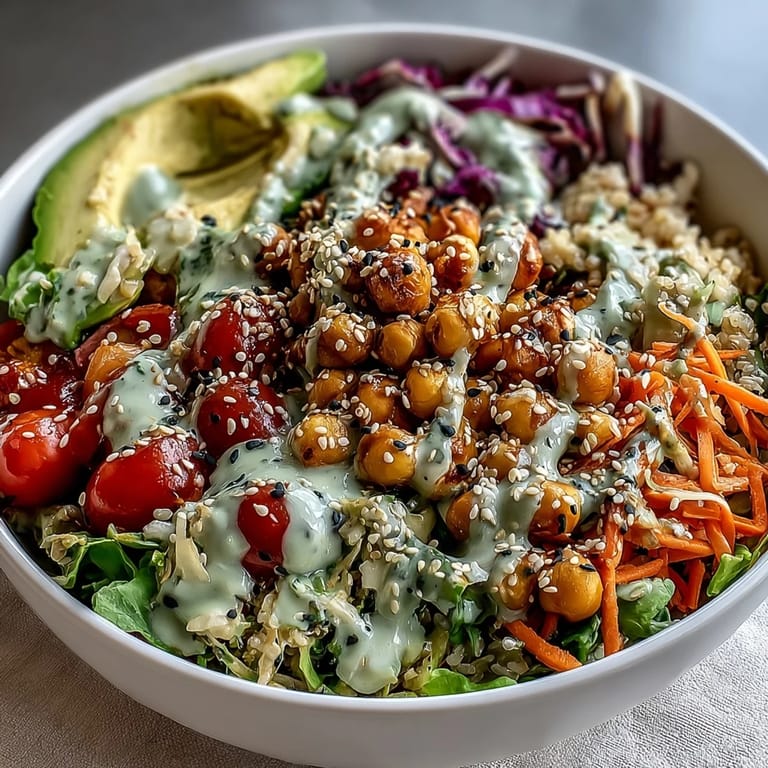
- Divide the cooked grain among four bowls, then arrange each vegetable in its own section radiating from the center, finishing with chickpeas and avocado slices. This creates that satisfying visual order that makes people pause before eating.
- Dress generously:
- Pour or drizzle the dressing over each bowl, making sure it reaches the grain so everything gets flavor, not just the top vegetables.
- Finish with toppings:
- Scatter sesame seeds, cilantro or parsley, and sliced green onions across the top of each bowl just before serving so they stay bright and don't get soggy.
 Pin
Pin I made these for myself one evening when I was tired and didn't want takeout, and sitting down with a warm bowl of grain and cool vegetables felt like giving myself a small kindness. There's something grounding about having all those colors in one place, and eating it made me feel capable of better things.
Why This Bowl Works Year-Round
In summer, the vegetables are crisp and the cold dressing feels refreshing against warm grain. In winter, you can steam or roast some of the vegetables for warmth, or swap raw carrots for roasted ones while keeping the concept intact. The beauty of a Buddha bowl is that it's flexible—it bends to seasons and what's available without losing its essential character.
Building Your Perfect Bowl Combination
Once you understand the framework—grain, raw or cooked vegetables, protein, dressing, toppings—you can improvise. I've used farro instead of rice, added roasted sweet potato for earthiness, or thrown in cubed tofu for extra protein. The dressing works with almost any vegetable combination you throw at it because the sesame oil and ginger are forgiving enough to tie disparate flavors together. Think of this recipe as a template that gives you permission to use what you have.
Dressing, Storage, and Last-Minute Thoughts
The dressing keeps refrigerated for up to a week, so make a double batch and use it on salads, noodles, or steamed vegetables throughout the week. If you're prepping the bowl ahead, store the components separately and assemble just before eating so nothing gets mushy. The avocado is the wildcard—slice it last, after dressing everything else, or it will discolor and disappoint.
- Refrigerate cooked grains in an airtight container for up to four days, and let them come to room temperature before assembling.
- Pre-chop vegetables the night before, but keep the avocado whole and slice it moments before serving.
- The sesame seeds taste fresher if you toast them yourself in a dry pan for two minutes, but store-bought toasted seeds work perfectly fine.
 Pin
Pin This bowl has become my answer to 'what should I make for lunch' because it tastes good, makes me feel nourished, and never feels like a punishment. That's really all a recipe needs to do.
Recipe Q&A
- → Can I make this ahead for meal prep?
Absolutely. The components store beautifully for 4-5 days when kept in separate containers. Assemble fresh bowls when ready to eat and add dressing just before serving to maintain crisp textures.
- → What other grains work well in this bowl?
Farro, bulgur, millet, or cauliflower rice all make excellent alternatives. Adjust cooking times accordingly and consider prepping grains in bulk for quick assembly throughout the week.
- → Is the dressing customizable?
Definitely. Add sriracha for heat, swap maple syrup with agave, or use orange juice instead of lime. The dressing base is versatile and adapts well to various flavor preferences.
- → How do I add more protein?
Grilled tofu, baked tempeh, edamame, or shredded chicken all complement these flavors wonderfully. For plant-based options, hemp seeds or roasted pumpkin nuts add protein and pleasant texture.
- → Can vegetables be swapped seasonally?
Certainly. Roasted sweet potatoes, shredded Brussels sprouts, fresh cucumber, or thinly sliced radishes work beautifully. Use whatever looks fresh and vibrant at your local market.