 Pin
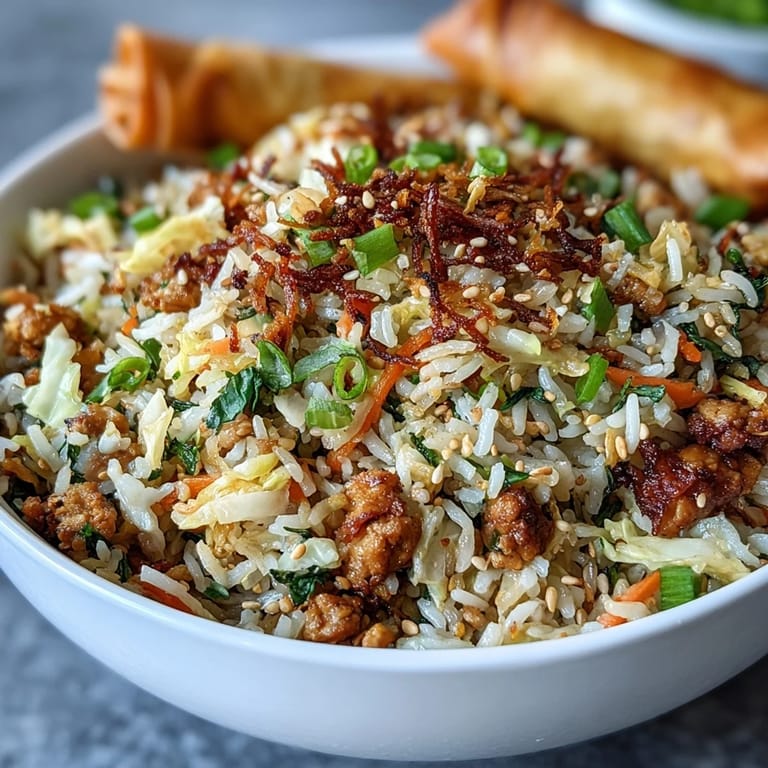
Pin My neighbor showed up at my door one evening with leftover egg rolls and a confession—she'd accidentally bought twice the filling. We stood in my kitchen laughing, wondering what to do with all that cabbage, ginger, and garlic, when inspiration struck: why not turn it into fried rice? That night, we created something that tasted like an egg roll had melted into every grain of rice, crispy and savory and nothing short of magic.
Years later, I made this for my kids' school potluck, and three parents asked for the recipe thinking it was some complicated restaurant technique. The truth was humbler and better—it was born from curiosity and a happy accident, which somehow tastes better than anything planned.
Ingredients
- Minced chicken (500 g / 1 lb): Ground chicken browns faster than chunks and soaks up all those savory flavors; if you can't find minced, pulse chicken breasts yourself for texture control.
- Eggs (2 large): These create silky pockets throughout the rice when scrambled gently—beat them first so they distribute evenly.
- Green cabbage (2 cups, thinly sliced): The heart of the egg roll flavor; slice it thin so it cooks through but keeps a gentle crunch.
- Carrots (1 cup, julienned): Julienne them (thin matchsticks) so they cook in minutes without becoming mushy.
- Green onions (1/2 cup, sliced): Add these at the end so their fresh bite doesn't fade into the wok heat.
- Garlic (2 cloves, minced): Fresh garlic makes this taste homemade; never use jarred here—the flavor matters.
- Fresh ginger (1 tablespoon, grated): Grate it just before cooking and your kitchen will smell exactly like a good fried rice should.
- Jasmine rice (3 cups, cooked and chilled): Day-old rice is non-negotiable—fresh rice becomes sticky and defeats the purpose of crispy fried rice.
- Soy sauce (3 tablespoons): This is your salt and depth; taste at the end and adjust because brands vary.
- Oyster sauce (1 tablespoon, optional): It adds an umami sweetness that makes people wonder what your secret ingredient is.
- Sesame oil (1 tablespoon): Drizzle it in during cooking, not before—heat can turn it bitter.
- Rice vinegar (1 teaspoon): Just enough to brighten everything without making it taste sour.
- Black pepper and white pepper (1/2 teaspoon each): White pepper gives you heat without dark specks; black pepper adds visual contrast.
- Sugar (1/2 teaspoon): A pinch balances the savory and salty without making anything sweet.
- Neutral oil (2 tablespoons total): Canola or vegetable oil won't compete with the other flavors.
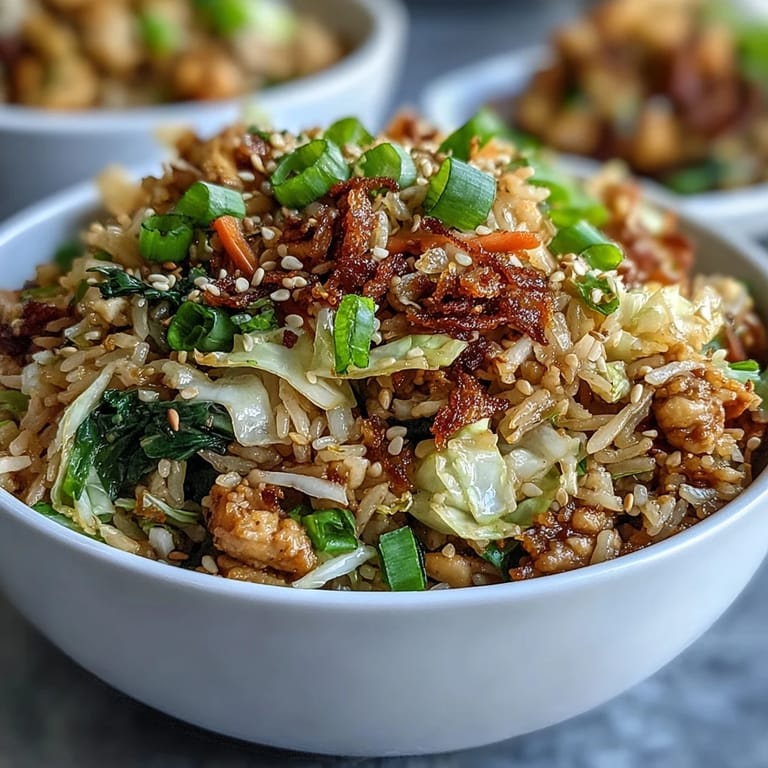
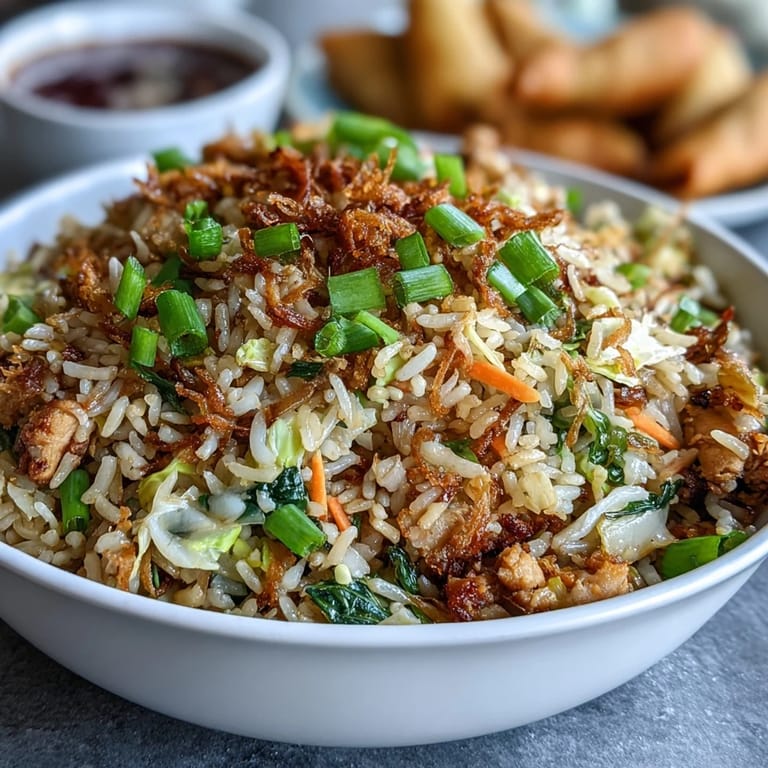
- Crispy fried onions (1/4 cup, optional): Scatter these on top just before serving so they stay crunchy and give you that texture surprise.
- Toasted sesame seeds (1 tablespoon): Toast them yourself if you can—they taste so much better than pre-toasted, and the smell is worth it.
Tired of Takeout? 🥡
Get 10 meals you can make faster than delivery arrives. Seriously.
One email. No spam. Unsubscribe anytime.
Instructions
- Get Everything Ready:
- Slice your cabbage paper-thin, julienne the carrots, beat the eggs in a small bowl, and make sure your rice is actually cold—warm rice won't fry properly. Having everything prepped before you start matters more than you'd think.
- Cook the Chicken Until Golden:
- Heat 1 tablespoon oil in your wok over medium-high heat and add the minced chicken, breaking it apart as it cooks for about 5 minutes. You want it browned on the edges, not just cooked through—this is where the flavor lives.
- Wake Everything Up with Garlic and Ginger:
- Add your minced garlic and grated ginger, stirring for just 1 minute until the wok smells incredible. Don't skip this moment—it changes everything that comes next.
- Add the Vegetables and Keep Them Alive:
- Toss in the cabbage and carrots, stirring constantly for 3-4 minutes so they stay crisp and bright green. This is the window—cook too long and they soften into mush.
- Scramble the Eggs into the Mix:
- Push everything to one side, add the remaining oil, and pour in your beaten eggs. Let them set slightly, then gently scramble and fold them into the chicken and vegetables. Soft curds, not small pieces, is the goal.
- Bring the Rice In and Season It:
- Add your cold rice, breaking up any clumps with your spatula, then drizzle in the soy sauce, oyster sauce, sesame oil, rice vinegar, both peppers, and sugar. Stir-fry for 3-4 minutes so the rice gets glossy and hot all the way through.
- Finish with Green Onions:
- Toss in the sliced green onions and cook for 1 more minute. Taste it and adjust salt if you need to.
- Plate and Crown It:
- Serve it hot in bowls, scattering crispy fried onions and sesame seeds on top so each spoonful has texture and surprise.
 Pin
Pin 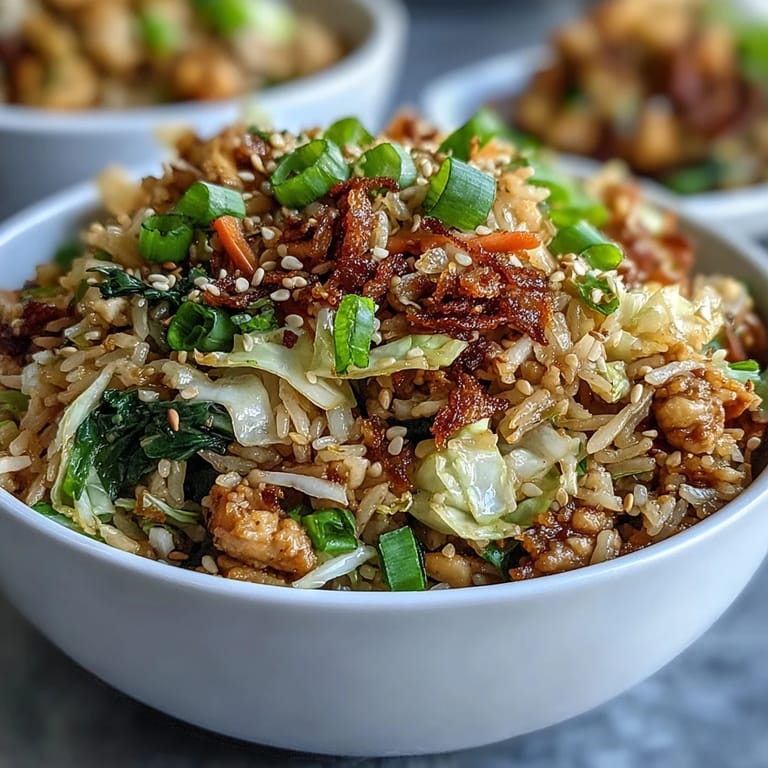 Pin
Pin The night my kids actually asked for seconds without being asked was the night this dish became something permanent in our kitchen. Somehow, wrapping vegetables in rice and soy sauce convinced them they were eating adventure.
When to Add Water Chestnuts and Bean Sprouts
If you want extra crunch that lasts until you eat it, dice up water chestnuts and toss them in with the cabbage and carrots—they hold their texture through the whole process. Fresh bean sprouts go in during the last 30 seconds so they warm through but stay crisp and alive.
Making It Your Own with Different Proteins
Ground turkey is leaner and tastes almost identical to chicken, while pork gives you a richer, slightly deeper flavor if you're cooking for people with adventurous tastes. Shrimp works too—cook it first until pink, then follow the rest of the recipe unchanged.
Keeping It Gluten-Free and Balanced
For gluten-free, swap regular soy sauce for tamari and skip the oyster sauce entirely—the rest of the recipe works perfectly and tastes just as good, maybe even cleaner. This dish pairs surprisingly well with cold green tea or a light white wine if you want to get fancy about it.
- Always read labels on soy and oyster sauce because they hide wheat in places you wouldn't expect.
- If you're cooking for a crowd with different dietary needs, make the base and let people choose their own toppings and seasonings.
- Leftover fried rice keeps for three days in the fridge and reheats beautifully in a wok over medium heat—just add a splash of water so it doesn't dry out.
 Pin
Pin 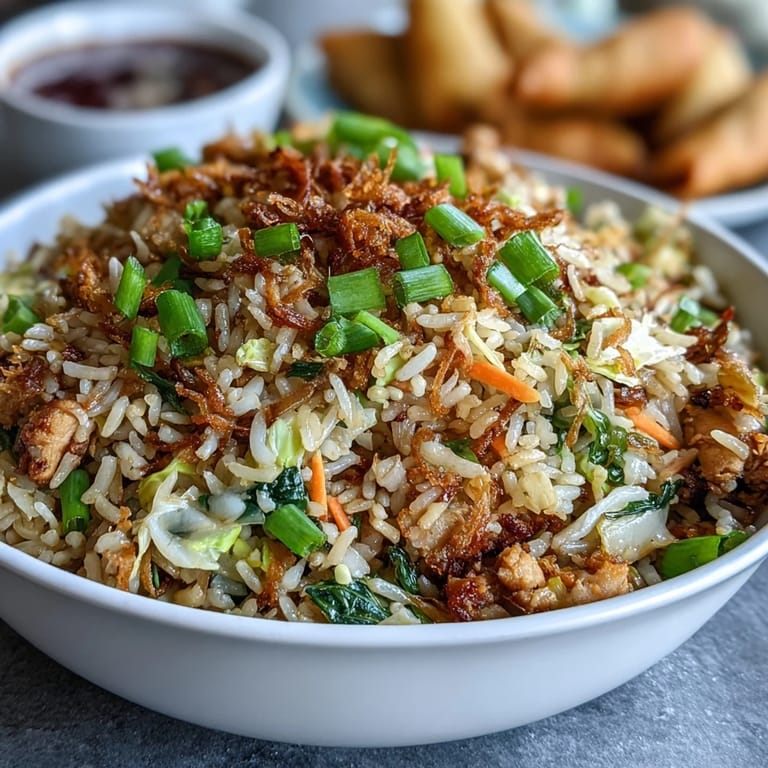 Pin
Pin This dish taught me that good food doesn't have to be complicated—it just has to be made with attention and care. Every time I make it, I think of my neighbor and that unexpected moment of kitchen inspiration.
Recipe Q&A
- → Why use day-old rice for this dish?
Chilled, day-old rice has dried out slightly, which prevents it from becoming mushy during stir-frying. The grains maintain their texture and develop those delicious crispy edges when tossed in the hot wok.
- → Can I use different proteins?
Absolutely. Ground turkey, pork, or even crumbled tofu work beautifully as alternatives to minced chicken. Adjust cooking time slightly to ensure your chosen protein is fully cooked through.
- → What makes the flavor reminiscent of egg rolls?
The combination of cabbage, carrots, garlic, ginger, soy sauce, and sesame oil captures the classic seasoning profile found in traditional egg rolls. Serve it over rice instead of wrapped in a crispy shell.
- → How do I achieve the best texture?
Keep your heat at medium-high and resist the urge to overcrowd the wok. Stir-fry in batches if necessary. Allow the rice to sit undisturbed for 30 seconds at a time to develop crispy, golden-brown edges.
- → Is this suitable for meal prep?
This dish reheats wonderfully and actually tastes better the next day as flavors meld. Store in airtight containers for up to 4 days and reheat in a skillet with a splash of water to refresh the texture.
- → What can I add for extra crunch?
Water chestnuts, bean sprouts, or chopped cashews add wonderful texture. Fresh cilantro, sliced chili peppers, or extra crispy fried onions make excellent finishing touches.