 Pin
Pin My first zaatar bread came from a corner bakery in Amman, where the baker's hands moved so quickly I couldn't follow them. Years later, standing in my own kitchen at dawn, I realized the magic wasn't speed—it was knowing when the dough felt right under your fingertips, and letting the aroma of toasted sesame guide you. This bread became my answer to every craving for something warm, savory, and deeply satisfying.
I made this for a late-night gathering once, and my friend took one bite, closed their eyes, and asked for the recipe immediately. That moment taught me that food doesn't need to be complicated to be memorable—sometimes it just needs to be made with care and shared with warmth.
Ingredients
- All-purpose flour (2 cups / 250 g): The foundation that will become tender and slightly crispy at the edges; measure by weight if you can, it makes a real difference.
- Instant dry yeast (1 teaspoon): This is what gives the dough its gentle rise and creates those tiny air pockets that make each bite satisfying.
- Sugar (1 teaspoon): A small gesture to wake up the yeast and add subtle sweetness that balances the savory topping.
- Salt (3/4 teaspoon): Don't skip this; it awakens all the other flavors and strengthens the gluten structure.
- Olive oil for the dough (2 tablespoons): Choose something you'd actually taste—this enriches the crumb and adds a whisper of richness.
- Warm water (2/3 cup / 160 ml, plus more as needed): The temperature matters more than you'd think; if it's too hot, you'll shock the yeast, too cool and nothing happens.
- Zaatar spice blend (1/4 cup / 30 g): This is where personality happens; if you've never tasted zaatar, expect a bright, lemony, herbaceous punch that lingers on your tongue.
- Toasted sesame seeds (2 tablespoons): The toasting is crucial—it deepens their nuttiness and makes them taste almost buttery.
- Extra virgin olive oil for topping (1/3 cup / 80 ml): This is the luxury touch that lets everything on top shine and creates those golden, crispy edges.
Tired of Takeout? 🥡
Get 10 meals you can make faster than delivery arrives. Seriously.
One email. No spam. Unsubscribe anytime.
Instructions
- Bring the dough together:
- Whisk your flour, yeast, sugar, and salt in a large bowl, then pour in the olive oil and gradually add warm water while stirring. The dough will start shaggy and reluctant; keep going until it holds together. You're looking for a soft, slightly sticky texture—not a stiff ball.
- Knead until smooth:
- Turn the dough onto a lightly floured surface and knead for five to seven minutes, folding it over itself, pushing with the heel of your hand. You'll feel it transform from rough to smooth and elastic, bouncing back when you poke it.
- Let it rise:
- Place the dough in an oiled bowl, cover it with a damp cloth, and find a warm corner of your kitchen. After an hour, it should have roughly doubled—this is where patience becomes flavor.
- Prepare your workspace:
- Heat your oven to 220°C (425°F) and line two baking sheets with parchment paper. This small step prevents sticking and keeps cleanup blessedly simple.
- Shape the breads:
- Divide the risen dough into four equal pieces and gently form each into a ball. Flatten and stretch each one into a six to seven inch round; the dough should be about a quarter-inch thick and roughly even across.
- Make the zaatar mixture:
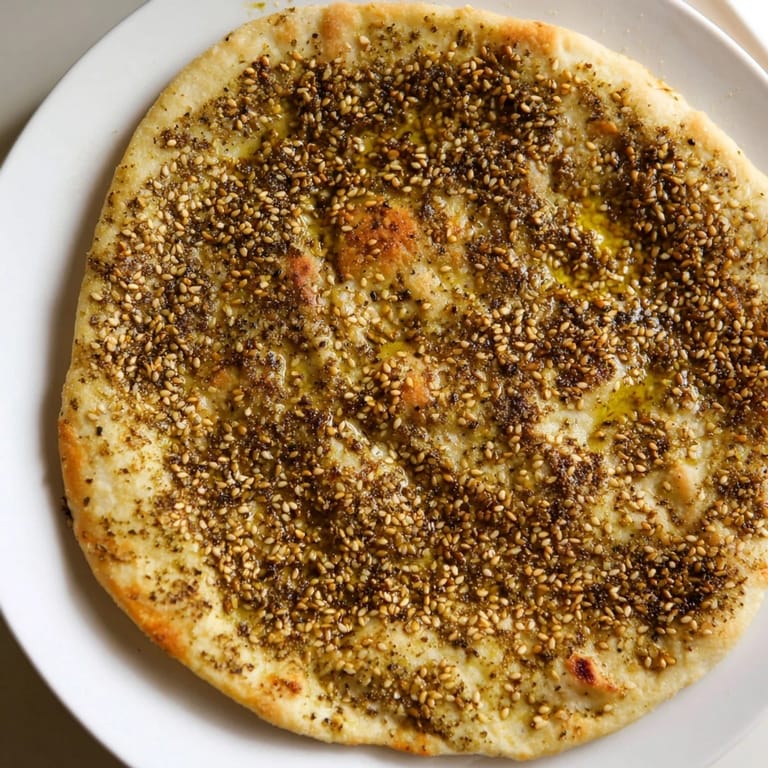
- In a small bowl, stir together the zaatar, sesame seeds, and olive oil until you have a loose, fragrant paste. The oil should coat everything, creating a golden-green mixture that smells incredible.
- Top with intention:
- Spread the zaatar mixture generously over each round, leaving a small border bare so the edges can puff and crisp. You can use the back of a spoon or your fingers, spreading gently so you don't deflate the dough.
- Bake until golden:
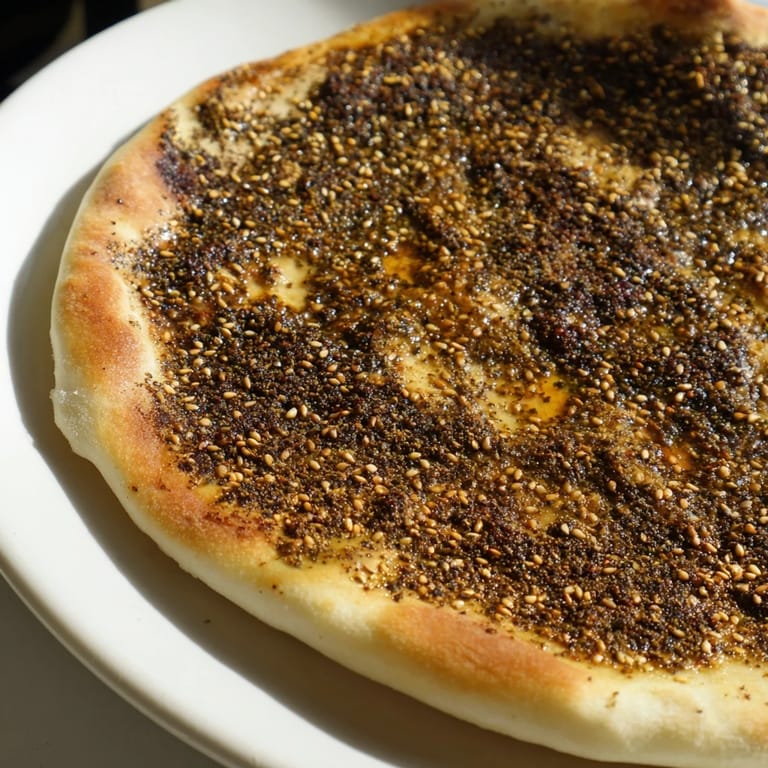
- Slide the baking sheets into the oven for twelve to fifteen minutes. The breads are ready when they're golden at the edges and smell irresistible, with slight char marks here and there.
- Cool and serve:
- Let them rest for a minute or two on the pan so they firm up, then transfer to a plate. Serve warm or at room temperature with labneh, olives, or fresh vegetables alongside.
 Pin
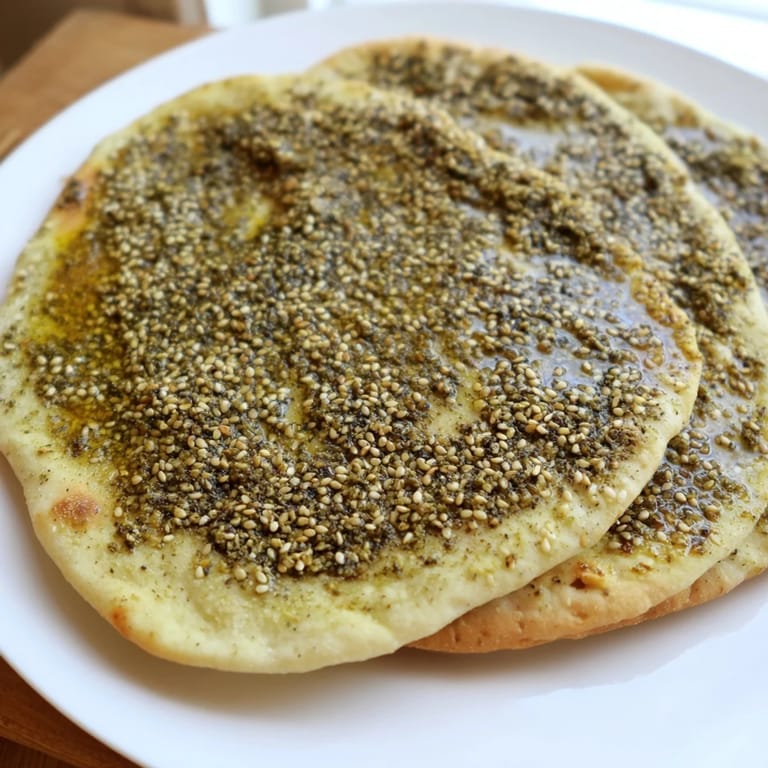
Pin There was an afternoon when my neighbor stopped by just as these came out of the oven, and the aroma pulled them inside before they could even knock. We sat at the kitchen counter tearing into warm bread, dipping it in olive oil, and I realized that these simple flatbreads had become a small ceremony—proof that the best moments in cooking aren't about perfection, they're about sharing something still warm from your hands.
The Zaatar Secret
Zaatar isn't just a spice blend—it's a flavor philosophy. In Levantine cooking, this mixture of dried herbs, sumac, and sesame has been tied to identity and tradition for centuries. When you scatter it across warm bread with good olive oil, you're not just making food; you're participating in something that tastes like belonging. The sumac brings a subtle tartness that makes you crave another bite, while the thyme and oregano ground everything in earth and comfort.
Olive Oil, the Unsung Hero
People often think olive oil is just for drizzling, but here it's the glue that holds the zaatar topping to the dough and the element that creates those golden, crispy edges. Use something you genuinely love to taste—not the cheapest option, but something with character. A robust extra virgin oil will transform these breads from simple to memorable, adding depth and a peppery finish that lingers pleasantly on your tongue.
Variations and What Works
Once you master the basic formula, zaatar bread becomes a canvas. Some mornings I add a pinch of chili flakes for heat, other times I scatter fresh thyme or sumac seeds on top for extra layers of flavor. The dough itself is forgiving—if your kitchen is cool, give it an extra thirty minutes to rise; if it's warm, check it after forty-five. The shape doesn't need to be perfect; rustic and uneven is actually more appealing and authentic.
- For extra spice, mix in a quarter teaspoon of chili flakes to the zaatar paste.
- If you don't have zaatar, you can make a quick substitute with dried oregano, thyme, sumac, and sesame seeds, though the result will taste different and fresher.
- These freeze beautifully unbaked—shape and top them, freeze on a tray, then bake from frozen, adding a couple extra minutes to the cooking time.
 Pin
Pin This bread reminds me that some of the most meaningful things we eat are the simplest ones—flour, yeast, salt, and herbs transformed into something that brings people together. Make it for yourself, make it for others, and let the smell and warmth speak for themselves.
Recipe Q&A
- → What is the best way to achieve a fluffy texture?
Letting the dough rise for the full hour and resting the shaped dough for 10 minutes before adding the topping helps develop a fluffier texture.
- → Can I add a spicy flavor to this bread?
Adding a pinch of chili flakes to the zaatar topping provides a pleasant spicy kick without overwhelming the flavors.
- → Which ingredients contribute to the bread’s crisp edges?
Rolling the dough to about 6-7 inches diameter and baking at 220°C ensures crisp, golden edges that contrast the soft interior.
- → What are good accompaniments for this bread?
Serving it with labneh, olives, hummus, or baba ganoush enhances its Middle Eastern character and adds variety.
- → Are there any common allergens to be aware of?
This bread contains gluten from wheat and sesame seeds, which are common allergens, so caution is advised.